Proactive Adjustments: Mastering Wheel Strategy Risk in Volatile Markets
In periods of heightened market volatility, characterized by rapid price swings and uncertain economic outlooks, the conventional wisdom of 'set it and forget it' options strategies quickly unravels. With the VIX often reflecting a nervous market sentiment and unexpected macro events routinely disrupting equilibrium, intermediate to advanced traders executing the wheel options strategy must evolve beyond static management to embrace dynamic, proactive adjustments. This is not merely about reacting to adverse moves, but about anticipating shifts and positioning defensively and opportunistically.
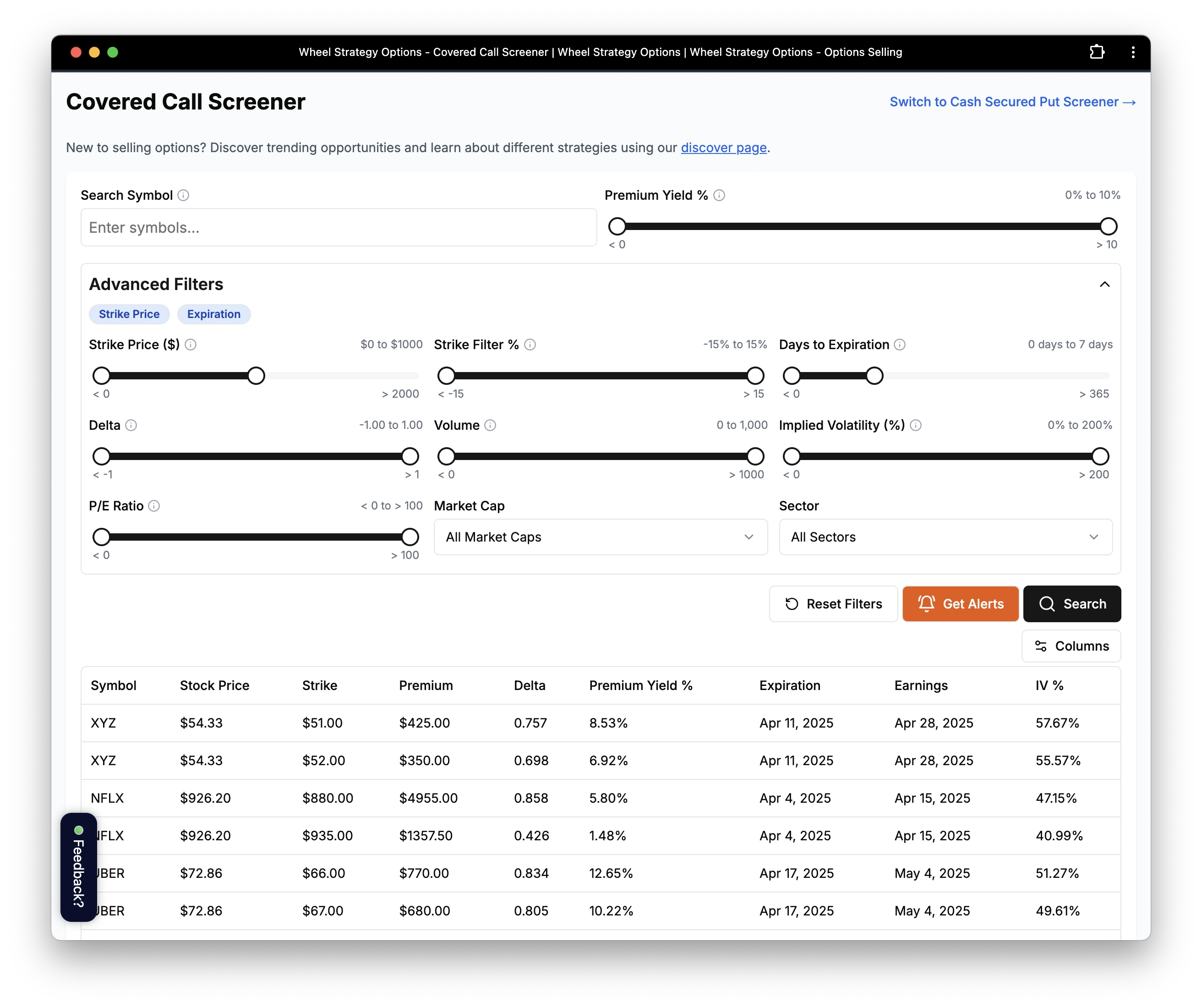
We highly recommend trying our Wheel Options screener here to follow along better.
The Imperative of Proactive Risk Management in Volatility
While the wheel strategy offers a compelling framework for consistent income generation through selling options – specifically cash secured puts and covered calls – its true resilience is tested under duress. Volatility, often perceived as a threat, simultaneously presents amplified premium collection opportunities and heightened risks of assignment or adverse price movements. A proactive approach means understanding how these dynamics influence your existing positions and planning adaptive responses before they become emergencies.
“The market is a device for transferring money from the impatient to the patient.”- Warren Buffett
This patience, however, must be coupled with an active awareness and a willingness to adjust. The goal is not to avoid all risk, but to manage it intelligently, ensuring longevity and consistent profitability in your wheel options portfolio.
Phase 1: Pre-Trade Due Diligence and Enhanced Selection
Identifying Robust Underlying Assets
Before initiating any cash secured put, meticulous due diligence is paramount, especially in volatile periods. Focus on fundamentally strong companies with low debt, consistent revenue, and a clear competitive advantage. These characteristics provide a psychological and financial cushion during market turbulence. For instance, instead of chasing high-premium but speculative plays like "XYZ Biotech," opt for established giants like "ABC Trading Group" that demonstrate resilience and predictable cash flows.
Volatility Metrics and Strike Price Selection
In a high implied volatility (IV) environment, premiums are inflated, making selling options more lucrative. However, this also indicates a higher probability of significant price swings. Traders must balance the allure of higher premiums with the increased risk of the underlying breaching their strike price.
- Implied Volatility (IV) Rank/Percentile: High IV rank suggests current IV is high relative to its historical range, often signaling an opportune time to sell.
- Out-of-the-Money (OTM) Distance: While higher premiums beckon closer-to-the-money strikes, in volatile markets, wider OTM strikes on your cash secured puts offer a larger buffer against sharp declines. Consider the probability of ITM (in-the-money) at expiration, not just the premium.
- Earnings and Events: Always avoid selling puts or calls immediately preceding major corporate events like earnings reports, FDA approvals, or significant economic data releases. These are known volatility catalysts that can lead to unpredictable gaps.
Phase 2: Dynamic Management of Open Positions
Adapting Strike and Expiration for Cash Secured Puts
Once a cash secured put position is open, continuous monitoring is crucial. If the underlying asset, say "XYZ Corp," starts to trend downwards rapidly towards your put strike due to market-wide sell-offs, proactive intervention is key:
| Scenario | Proactive Adjustment | Rationale |
|---|---|---|
| Underlying approaching strike (Still OTM) | Roll Down and Out: Buy back the existing put, sell a new put at a lower strike price with a later expiration date. | Collects more premium, provides more time for recovery, lowers effective cost basis if assigned. This is a common defensive maneuver when managing selling options positions. |
| Underlying breaches strike (Slightly ITM) | Roll Out: Buy back the existing put, sell a new put at the same strike price with a later expiration date. | Gives the underlying more time to recover above the strike, avoiding early assignment and allowing premium decay to work in your favor. |
| Significant downside move (Deep ITM) | Accept Assignment: Prepare to take ownership of shares. | Sometimes, the most prudent move is to accept assignment and pivot to the covered call leg of the wheel strategy. Attempting to roll too aggressively can exacerbate losses or tie up capital unnecessarily. |
Managing Covered Calls in Choppy Markets
Upon assignment of shares, the focus shifts to covered calls. Volatile markets can lead to rapid upward swings, making strike management critical for maximizing gains while avoiding share recall at unfavorable prices.
Consider the following when selling options in the form of covered calls:
- Selling OTM Calls: In a volatile, but potentially upward-trending market, sell calls further out-of-the-money to allow more room for capital appreciation on the underlying shares.
- Rolling Up and Out: If the stock, e.g., "ABC Trading Group," rallies significantly towards your call strike, buy back the current call and sell a new call at a higher strike and/or later expiration. This captures more upside potential on the shares and collects additional premium.
- Rolling Down and Out (Rare, Defensive): If the stock unexpectedly reverses downwards sharply, a very defensive maneuver might be to roll down and out to collect more premium, but this reduces the effective selling price of your shares if they are called away at the lower strike. This is generally less common in the call leg unless you are trying to exit a position or realize a loss for tax purposes.
“Risk comes from not knowing what you’re doing.”- Warren Buffett
For the wheel strategy, this means knowing your tolerance for assignment, your outlook on the underlying, and the specific mechanics of rolling.
Phase 3: Position Sizing and Capital Allocation
Perhaps the most critical risk management tool, especially in volatility, is appropriate position sizing. Even the most robust strategy can fail if capital is over-allocated to a single trade or asset. Ray Dalio, a proponent of radical transparency and thoughtful risk management, famously emphasizes diversification and risk parity. For the wheel strategy:
- Fractional Allocation: Never allocate more than a small percentage (e.g., 2-5%) of your total trading capital to any single underlying. This ensures that even if one position moves significantly against you, the impact on your overall portfolio is contained.
- Cash Reserves: Maintain significant cash reserves. These are essential for rolling positions, covering potential assignments, or taking advantage of new opportunities in market dips.
- Monitoring Portfolio Delta: For advanced traders, monitor your portfolio's overall delta. In a bullish market, a slightly positive delta might be acceptable, but in high volatility, consider a more delta-neutral or even slightly negative bias if you anticipate further downside.
“Compound interest is the eighth wonder of the world. He who understands it, earns it; he who doesn't, pays it.” While often attributed to Einstein, the essence applies to compounding both gains and losses. Managing risk effectively ensures you're on the earning side.
Phase 4: Psychological Discipline Amidst Market Noise
Volatile markets are often characterized by heightened fear and greed, leading to emotional trading decisions. Maintaining psychological discipline is paramount for successful wheel options execution.
- Stick to Your Plan: Develop a detailed trading plan, including entry and exit criteria, and adhere to it. This prevents impulsive decisions driven by market hype or panic.
- Manage Expectations: Understand that not every trade will be a winner. Losses are a part of trading. The goal is to ensure your winning trades and effective risk management outweigh your losing ones.
- Continuous Learning: The market is constantly evolving. Staying informed and continuously refining your strategies, especially concerning selling options and the nuances of the wheel strategy, is vital.
“Most people would rather be certain than right.”- Nassim Nicholas Taleb
In options trading, embracing uncertainty and adapting your approach, rather than seeking absolute certainty, is a hallmark of an expert trader.
Leveraging Tools for Enhanced Risk Management
To effectively implement these proactive adjustments, traders need robust tools. A sophisticated wheel strategy screener can be invaluable. It allows you to quickly identify suitable underlying assets based on your criteria (liquidity, IV, fundamentals), monitor existing positions, and analyze potential roll scenarios. Such tools empower you to make data-driven decisions swiftly, which is critical in fast-moving markets.
Key Takeaways for Mastering Wheel Strategy Risk:
- Embrace Proactivity: Shift from reactive to anticipatory management of your wheel options positions.
- Deepen Due Diligence: In volatile markets, scrutinize underlying fundamentals and relevant IV metrics more rigorously before initiating cash secured puts.
- Master Rolling Strategies: Utilize rolling down and out for puts, and rolling up and out for calls, to dynamically adjust positions and manage assignment risk while consistently selling options.
- Strict Position Sizing: Allocate capital conservatively and maintain ample cash reserves to weather downturns and capitalize on opportunities.
- Cultivate Discipline: Adhere to a trading plan and manage emotional responses to market fluctuations.
- Leverage Technology: Utilize advanced screeners and analytical tools to enhance decision-making speed and accuracy.
Disclaimer: *This blog post is for informational purposes only and should not be considered financial advice. Trading options involves risk of loss. Conduct thorough research and consult with a qualified financial advisor before making any investment decisions.*
Follow us on:
Threads | X (Twitter) | Reddit | Instagram
Comments ()