Optimizing Portfolio Allocation for Consistent Weekly Income with the Wheel Strategy
In today's dynamic market, where traditional income avenues yield diminishing returns, the strategic deployment of income-generating options strategies has seen a significant resurgence. Recent data indicates a robust increase in retail options trading volume, underscoring a growing appetite for sophisticated techniques like the Wheel Strategy to extract consistent weekly income. For the discerning intermediate to advanced trader already familiar with the foundational mechanics of selling options through the wheel strategy, the paramount challenge shifts from execution to optimization, particularly in the realm of portfolio allocation.
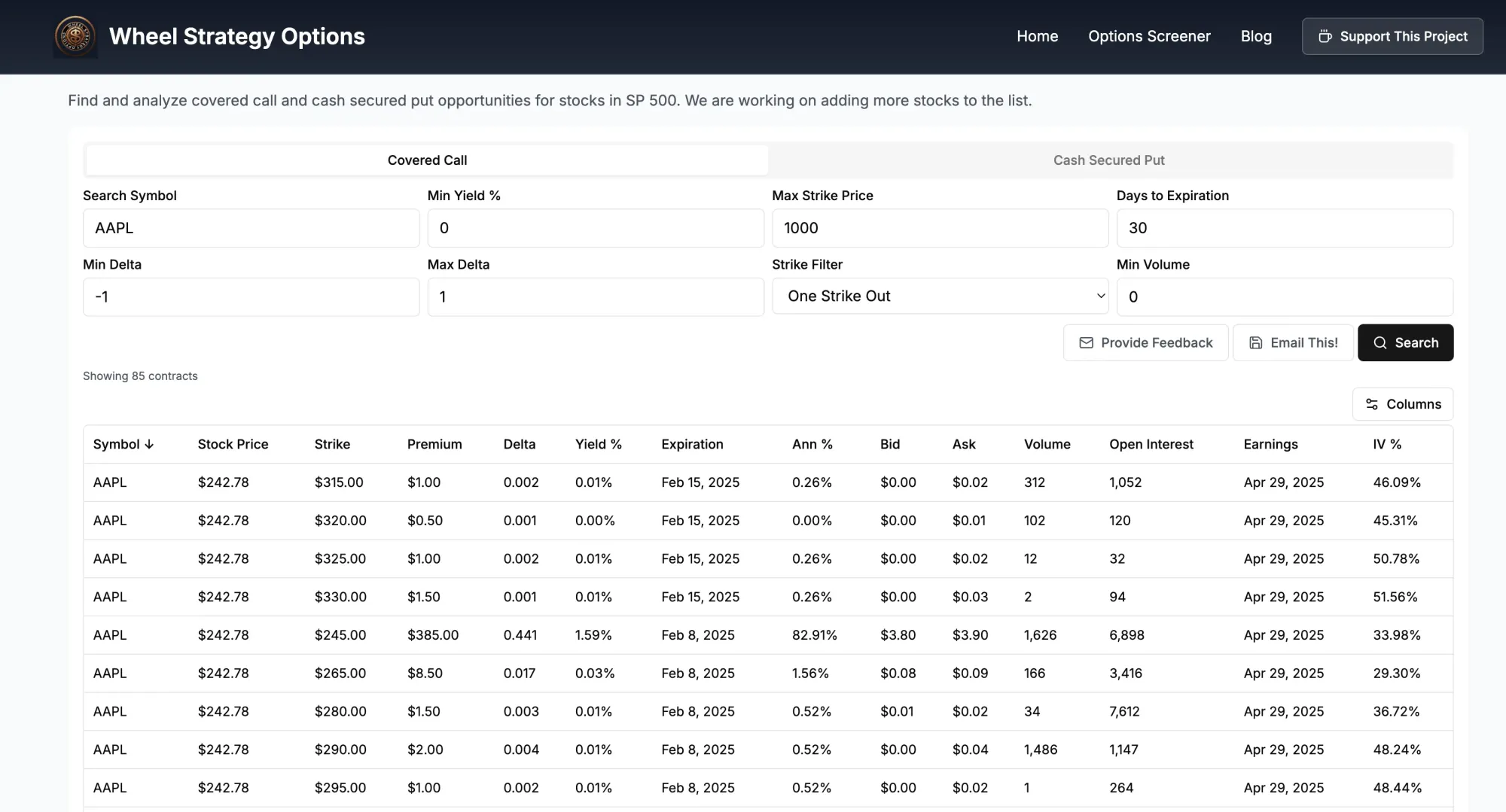
We highly recommend trying our Wheel Options screener here to follow along better.
The Core Tenets of the Wheel: Beyond Basic Execution
The Wheel Strategy, at its essence, is a sequential strategy involving the continuous sale of cash secured puts followed by covered calls. While the mechanics are straightforward, true proficiency lies in understanding the interplay of implied volatility (IV), theta decay, and Vega. Experienced traders recognize that simply initiating a trade isn't enough; the art is in managing the trade through various market cycles and optimizing entry and exit points for premium capture.
“Risk comes from not knowing what you're doing.”- Warren Buffett
This principle applies acutely to the Wheel. Without a deep understanding of the underlying asset's behavior and the options Greeks, the strategy can quickly pivot from an income generator to a capital sink. Advanced practitioners focus on selecting high-quality, fundamentally sound equities where they wouldn't mind taking assignment, transforming potential risk into an opportunity to acquire shares at a discount.
Strategic Portfolio Allocation: The Bedrock of Consistent Income
Optimizing portfolio allocation for the Wheel Strategy extends far beyond simply picking a few stocks. It involves a sophisticated layering of diversification, correlation analysis, and disciplined position sizing to create a resilient income stream.
Diversification Beyond Tickers: Sector, Industry, and Market Cap
A common pitfall is to diversify only by ticker, neglecting broader market exposures. A truly optimized portfolio diversifies across distinct sectors (e.g., technology, healthcare, industrials), industries within those sectors, and even market capitalizations (large-cap, mid-cap, small-cap). This reduces idiosyncratic risk tied to a single company or sector downturn.
Consider a portfolio heavily weighted in tech stocks. While individually strong, a sector-wide correction due to rising interest rates could trigger simultaneous assignments across multiple positions, straining capital and hindering the ability to write new covered calls effectively.
Understanding Correlation: Mitigating Systemic Risk
The interrelation between assets, or correlation, is a critical, often overlooked aspect of portfolio allocation. High correlation means assets move in tandem, negating the benefits of diversification during market stress. Identifying low-correlation assets or even negatively correlated assets can significantly stabilize weekly income.
For instance, while two tech companies might seem diversified by ticker, their price movements are often highly correlated. Conversely, a utility stock might have a lower correlation with a growth tech stock, offering a more robust diversification benefit.
| Portfolio Design | Impact on Wheel Strategy Performance | Risk Profile |
|---|---|---|
| High Correlation Assets | Simultaneous assignment risk, clustered premium decay, potential for significant capital drawdowns during market downturns. | Higher systemic risk exposure. |
| Low/Negative Correlation Assets | Smoother income stream, reduced risk of simultaneous assignment, better capital utilization during varied market conditions. | Lower systemic risk exposure. |
Position Sizing and Capital Allocation: Disciplined Deployment
Effective position sizing is paramount. Risk-adjusted sizing, such as a fractional Kelly Criterion approach or simply a fixed percentage of total capital per trade, prevents overexposure to any single underlying. This ensures that a single adverse event does not cripple the entire portfolio.
“It's not whether you're right or wrong that's important, but how much money you make when you're right and how much you lose when you're wrong.”- George Soros
This wisdom directly applies. Allocating a smaller percentage of capital to higher-volatility, higher-premium trades and a larger percentage to stable, lower-volatility plays can optimize the risk-reward profile, fostering consistent income generation.
Advanced Strike and Expiration Management for Premium Maximization
Beyond simply selling puts and calls, optimizing strike and expiration selection significantly impacts consistent income.
Dynamic Strike Selection: Balancing Probability and Premium
For cash secured puts, selecting strikes too far OTM yields minimal premium, while strikes too close to the money increase assignment risk. The sweet spot often lies in a strike with a delta between -0.20 and -0.35, offering a favorable balance of premium and probability of expiring worthless. However, this isn't static. In high IV environments, one might adjust to a slightly further OTM strike for comparable premium, while in low IV, a slightly closer strike might be warranted.
When writing covered calls, the goal is often to maximize premium while allowing for potential upside capture if the stock rallies. Selling calls just above a perceived resistance level or at a price target where you'd be comfortable selling your shares can be an effective strategy.
Optimal Expiration Cycles: Weekly vs. Monthly
The choice between weekly and monthly expirations hinges on the underlying's volatility, the desired frequency of income, and one's market outlook. Weekly options offer rapid theta decay, allowing for more frequent premium collection, but also demand more active management and recalibration.
Consider ABC Trading Group. Selling weekly puts might generate more aggregate premium over a month than a single monthly put, assuming consistent market conditions. However, monthly options can be more forgiving of short-term price fluctuations and require less frequent monitoring.
Navigating Assignment: From Eventuality to Opportunity
Assignment is an inherent part of the Wheel. For the advanced trader, it's not a failure but a natural transition in the strategy.
Proactive Assignment Management and Rolling Strategies
When a cash secured put is nearing assignment, a common tactic is to roll it out in time and/or down in strike. This can potentially avoid assignment, collect additional premium, and give the underlying more time to recover. However, consistently rolling at a loss can erode capital, necessitating a disciplined approach to when to accept assignment.
Transitioning to Covered Calls: Maximizing Yield on Assigned Shares
Once shares are assigned, the focus shifts to writing covered calls against them. The goal here is to collect premium while waiting for the stock to recover to, or surpass, your cost basis. Strategic strike selection, often slightly above your cost basis, ensures you can exit with a profit while benefiting from the collected call premiums.
“The biggest mistake is not learning from your mistakes.”- Benjamin Graham
Learning from each assignment – whether it was due to poor stock selection, aggressive strike, or broader market conditions – refines future strategy.
Risk Management Frameworks for Wheel Traders
Robust risk management is non-negotiable for consistent income. It's about preserving capital to continue trading.
Defining Maximum Allowable Loss (MAL)
Just as with stock trading, establishing a 'stop-loss equivalent' for options trades is crucial. This could be a percentage of premium received, a percentage of the underlying's price, or a predefined capital drawdown threshold for the entire portfolio. Adhering to MAL limits prevents small losses from compounding into significant drawdowns.
Monitoring Market-Wide Risks
The Wheel Strategy is not immune to macroeconomic shifts. Monitoring interest rate changes, inflation data, geopolitical events, and major economic reports allows for proactive adjustments, such as reducing position sizes, focusing on defensive sectors, or temporarily reducing exposure.
The Technological Edge: Leveraging the Wheel Strategy Screener
For intermediate and advanced traders, manual stock and options analysis for the Wheel Strategy can be incredibly time-consuming. This is where advanced tools become invaluable. A robust wheel strategy screener can filter thousands of options chains to identify high-probability trades that align with specific risk parameters and income goals. Such screeners provide crucial data points—like implied volatility, delta, open interest, and historical performance—to empower informed decision-making and efficient portfolio optimization.
The Psychological Discipline of the Wheel
Ultimately, consistent weekly income is as much about psychological fortitude as it is about technical prowess. The temptation to chase higher premiums on volatile assets, or to roll losing positions indefinitely, can undermine even the best-laid plans. Patience, discipline, and adherence to a predefined trading plan are critical.
“The game is not about trying to be a genius. It's about being in the game every day.”- Naval Ravikant
This ethos perfectly encapsulates the Wheel: consistent, methodical execution over time builds wealth, rather than relying on speculative 'home runs.'
Key Takeaways for Optimizing Your Wheel Strategy
- Diversify Strategically: Look beyond individual tickers to sectors, industries, and market cap, paying close attention to asset correlation.
- Master Position Sizing: Implement disciplined capital allocation methods to manage risk exposure per trade and across the portfolio.
- Dynamic Strike & Expiration: Adjust your strike and expiration choices based on market volatility, desired premium, and personal risk tolerance.
- Embrace Assignment: View assignment as a natural step in the Wheel, transitioning smoothly from cash secured puts to covered calls.
- Robust Risk Management: Define maximum allowable loss thresholds and monitor macroeconomic risks to protect capital.
- Leverage Technology: Utilize a wheel strategy screener to streamline research and identify optimal trading opportunities.
- Cultivate Discipline: Consistency and adherence to your trading plan are paramount for long-term success with the Wheel Strategy.
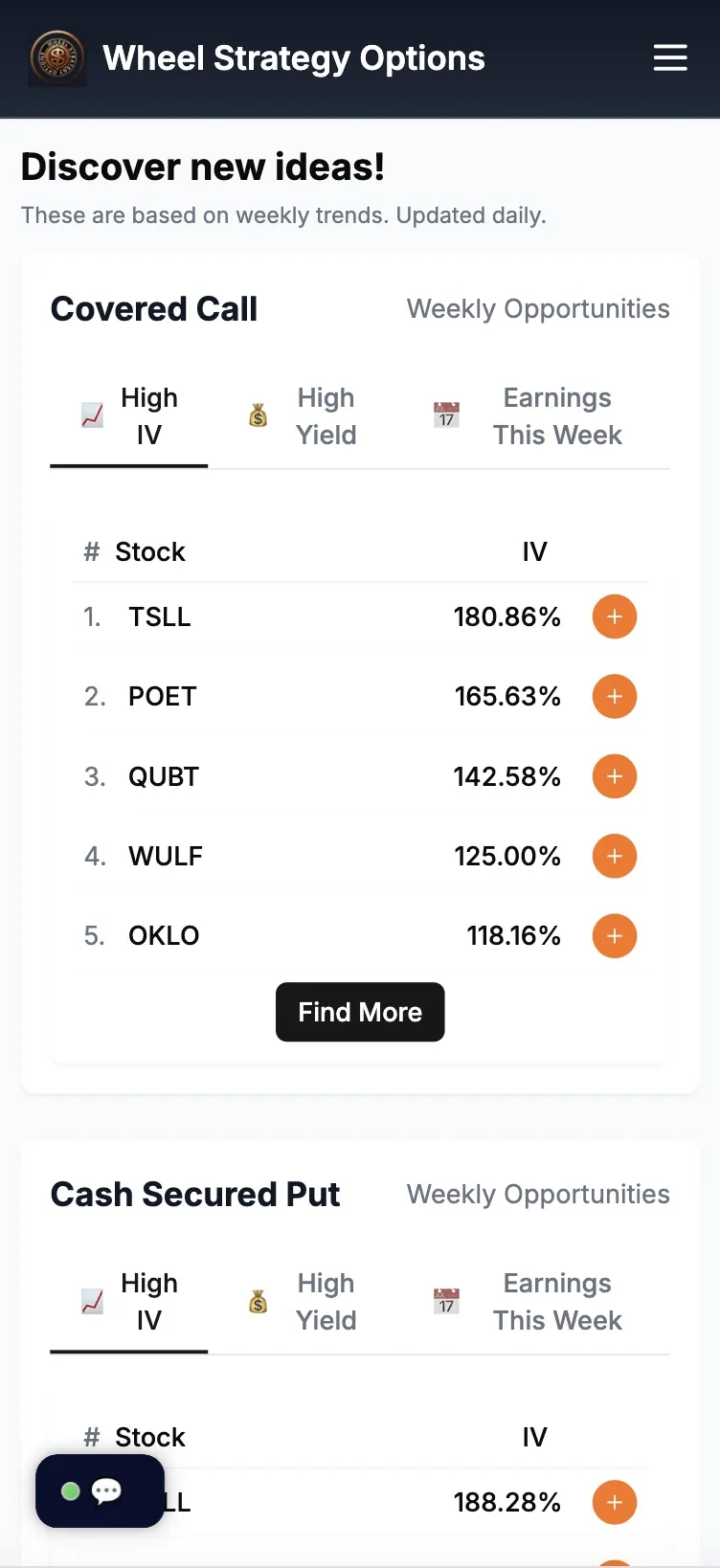
We highly recommend trying our Wheel Options screener here.
Disclaimer: *This blog post is for informational purposes only and should not be considered financial advice. Trading options involves risk of loss. Conduct thorough research and consult with a qualified financial advisor before making any investment decisions.*
Follow us on:
Threads | X (Twitter) | Reddit | Instagram
Comments ()